1個の商品

4-Course Renaissance Cittern for Sale  Muzikkon’s 4-course Renaissance Citterns are expertly crafted to bring the lively spirit of the Renaissance era to life. This instrument was beloved throughout the 16th century for its bright, resonant tone and compact design, making it a popular choice for both solo performances and accompaniment. A perfect travel companion, the... Read More

4-Course Renaissance Cittern for Sale 

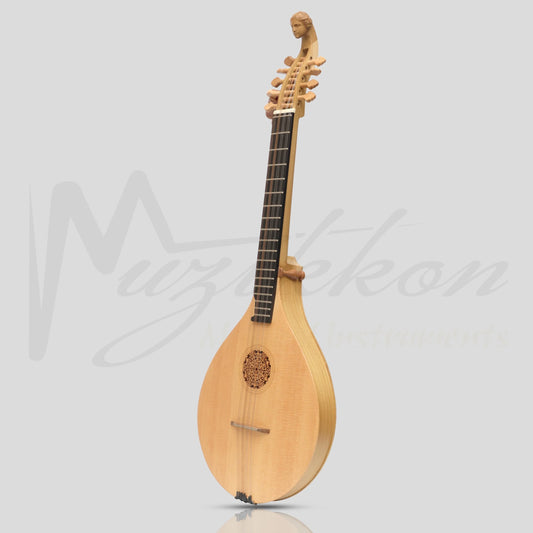
Muzikkon’s 4-course Renaissance Citterns are expertly crafted to bring the lively spirit of the Renaissance era to life. This instrument was beloved throughout the 16th century for its bright, resonant tone and compact design, making it a popular choice for both solo performances and accompaniment. A perfect travel companion, the cittern was frequently played at courts, banquets, and celebrations, accompanying songs and dances. 

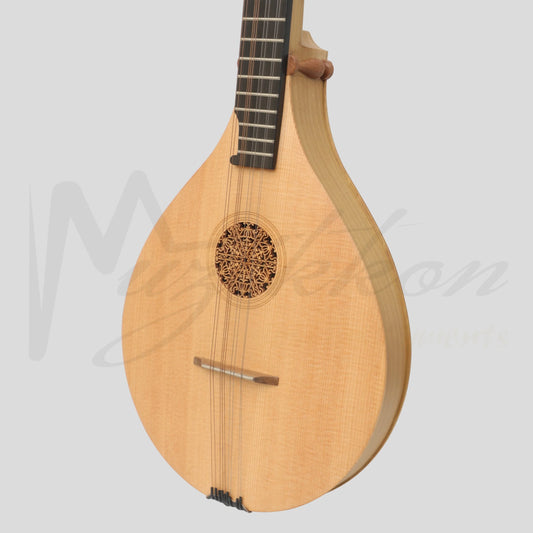
The Renaissance cittern features a sleek, pear-shaped body with a round back and a thin, curved soundboard, which produces its characteristic lively sound. With four double courses, this model offers the opportunity for various tunings, including C-G-D-A and G-D-A-E, allowing it to adapt to different musical settings. Available with either gut or nylgut strings, the cittern is as versatile as it is beautiful. 

Whether you are an accomplished musician or a history enthusiast, our 4-course Renaissance Cittern brings the music of the past into your hands. Each instrument is carefully crafted to ensure exceptional sound quality and a truly authentic playing experience. Embrace the rich tradition of Renaissance music and make this historic instrument part of your musical journey today. 

Frequently Asked Questions

What is a cittern?
The cittern is a traditional plucked string instrument that originated during the Renaissance. Similar to the mandolin and guitar, it features a pear-shaped body with a flat top and back, a long neck, and typically four or five courses of strings. It is commonly played with a plectrum and is especially popular in folk, Celtic, and traditional music.
What is the difference between a cittern and a bouzouki?
While both instruments are closely related, a bouzouki typically has a longer scale length (around 25 inches) with octave tuning on the lower string courses. A cittern generally has ten strings arranged in five courses and often features a slightly shorter scale length, producing its own distinctive rich and resonant tone.
Are replacement parts or accessories available for citterns?
Yes. Replacement strings, tuning machines, gig bags, hard cases, and other accessories may be available separately or included with selected cittern models. Check the individual product listing for included accessories.
What styles of music are best suited to a cittern?
The cittern is ideal for folk, Celtic, acoustic, traditional, and world music. Its bright, ringing tone makes it equally effective for melodic lines, rhythmic accompaniment, and ensemble playing.
How is a cittern tuned?
Cittern tunings can vary depending on the instrument and playing style. A common tuning is CGDA, while many modern players prefer GDAD or other alternate tunings to complement Celtic and folk music. Some citterns are also tuned to maintain the bass relationship found in the traditional Greek bouzouki tuning (CFAD).
How many strings does a cittern have?
Most modern citterns have either 8 or 10 strings. Four-course citterns typically have 8 strings arranged in pairs, while five-course models feature 10 strings. The number of strings and tuning configuration may vary depending on the maker and musical style.
Read Less


コレクション: Cittern

4-Course Renaissance Cittern for Sale  Muzikkon’s 4-course Renaissance Citterns are expertly crafted to bring the lively spirit of the Renaissance era to life. This instrument was beloved throughout the 16th century for its bright, resonant tone and compact design, making it a popular choice for both solo performances and accompaniment. A perfect travel companion, the... Read More

4-Course Renaissance Cittern for Sale 

Muzikkon’s 4-course Renaissance Citterns are expertly crafted to bring the lively spirit of the Renaissance era to life. This instrument was beloved throughout the 16th century for its bright, resonant tone and compact design, making it a popular choice for both solo performances and accompaniment. A perfect travel companion, the cittern was frequently played at courts, banquets, and celebrations, accompanying songs and dances. 

The Renaissance cittern features a sleek, pear-shaped body with a round back and a thin, curved soundboard, which produces its characteristic lively sound. With four double courses, this model offers the opportunity for various tunings, including C-G-D-A and G-D-A-E, allowing it to adapt to different musical settings. Available with either gut or nylgut strings, the cittern is as versatile as it is beautiful. 

Whether you are an accomplished musician or a history enthusiast, our 4-course Renaissance Cittern brings the music of the past into your hands. Each instrument is carefully crafted to ensure exceptional sound quality and a truly authentic playing experience. Embrace the rich tradition of Renaissance music and make this historic instrument part of your musical journey today. 

Frequently Asked Questions

What is a cittern?
The cittern is a traditional plucked string instrument that originated during the Renaissance. Similar to the mandolin and guitar, it features a pear-shaped body with a flat top and back, a long neck, and typically four or five courses of strings. It is commonly played with a plectrum and is especially popular in folk, Celtic, and traditional music.
What is the difference between a cittern and a bouzouki?
While both instruments are closely related, a bouzouki typically has a longer scale length (around 25 inches) with octave tuning on the lower string courses. A cittern generally has ten strings arranged in five courses and often features a slightly shorter scale length, producing its own distinctive rich and resonant tone.
Are replacement parts or accessories available for citterns?
Yes. Replacement strings, tuning machines, gig bags, hard cases, and other accessories may be available separately or included with selected cittern models. Check the individual product listing for included accessories.
What styles of music are best suited to a cittern?
The cittern is ideal for folk, Celtic, acoustic, traditional, and world music. Its bright, ringing tone makes it equally effective for melodic lines, rhythmic accompaniment, and ensemble playing.
How is a cittern tuned?
Cittern tunings can vary depending on the instrument and playing style. A common tuning is CGDA, while many modern players prefer GDAD or other alternate tunings to complement Celtic and folk music. Some citterns are also tuned to maintain the bass relationship found in the traditional Greek bouzouki tuning (CFAD).
How many strings does a cittern have?
Most modern citterns have either 8 or 10 strings. Four-course citterns typically have 8 strings arranged in pairs, while five-course models feature 10 strings. The number of strings and tuning configuration may vary depending on the maker and musical style.
Read Less